Raw Material Consistency
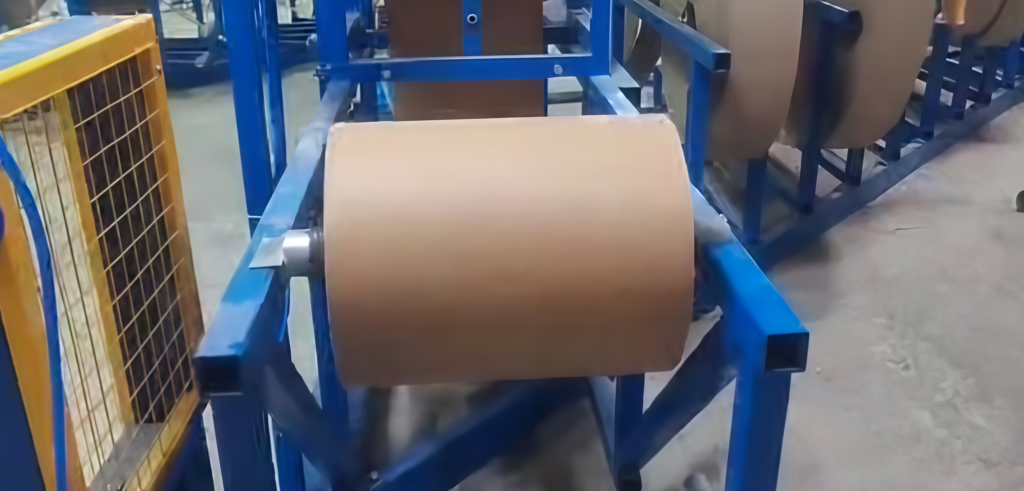
The foundation of a strong edge board begins with the paper itself. If the paper quality is inconsistent, the final product may not achieve stable compression performance even when using the same production process. For this reason, the 120A Edge Board Making Machine is designed to process bobbin paper above 300 gsm and kraft paper above 160 gsm. Using suitable paper materials helps provide the structural foundation required for producing durable edge boards capable of withstanding stacking pressure during warehousing and transportation.
Glue Application and Layer Bonding
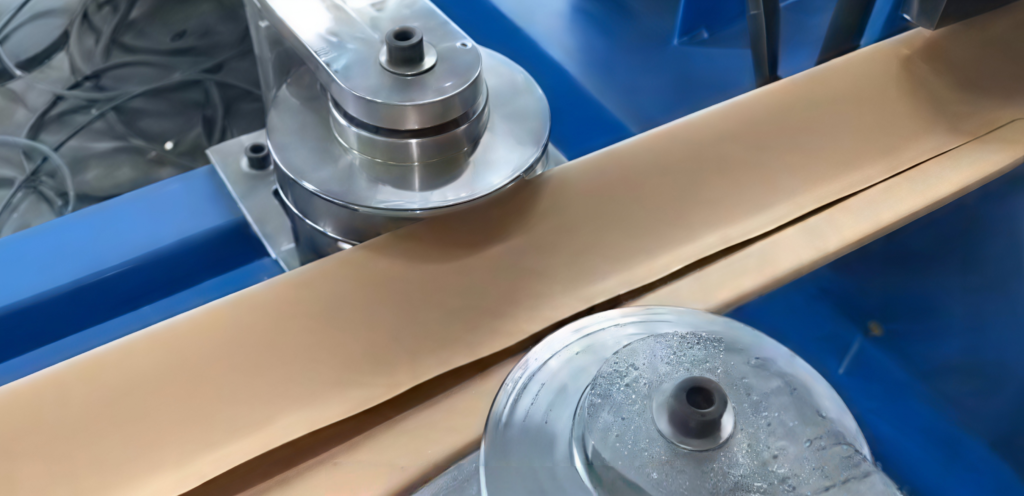
Another critical factor is adhesive performance. Compression strength depends not only on the paper quality but also on how effectively the paper layers are bonded together. The 120A Edge Board Making Machine supports latex glue, PVA glue, and starch glue, allowing manufacturers to select suitable adhesive systems according to production requirements. When glue is distributed evenly and penetrates properly between layers, the edge board structure becomes more stable and resistant to deformation under load. Poor adhesive bonding can result in layer separation, reduced strength, and inconsistent product quality.
Paper Layer Structure
The number of paper layers also plays an important role in compression resistance. More layers generally provide stronger structural support, but only when those layers are properly bonded and formed. The machine is capable of processing up to 14 layers of paper. This multi-layer structure helps create a stronger edge board capable of providing enhanced corner protection and load-bearing support for palletized goods. However, simply increasing the number of layers is not enough. Consistency throughout the forming process is equally important to ensure each layer contributes effectively to the final product strength.
Forming Accuracy and Production Stability
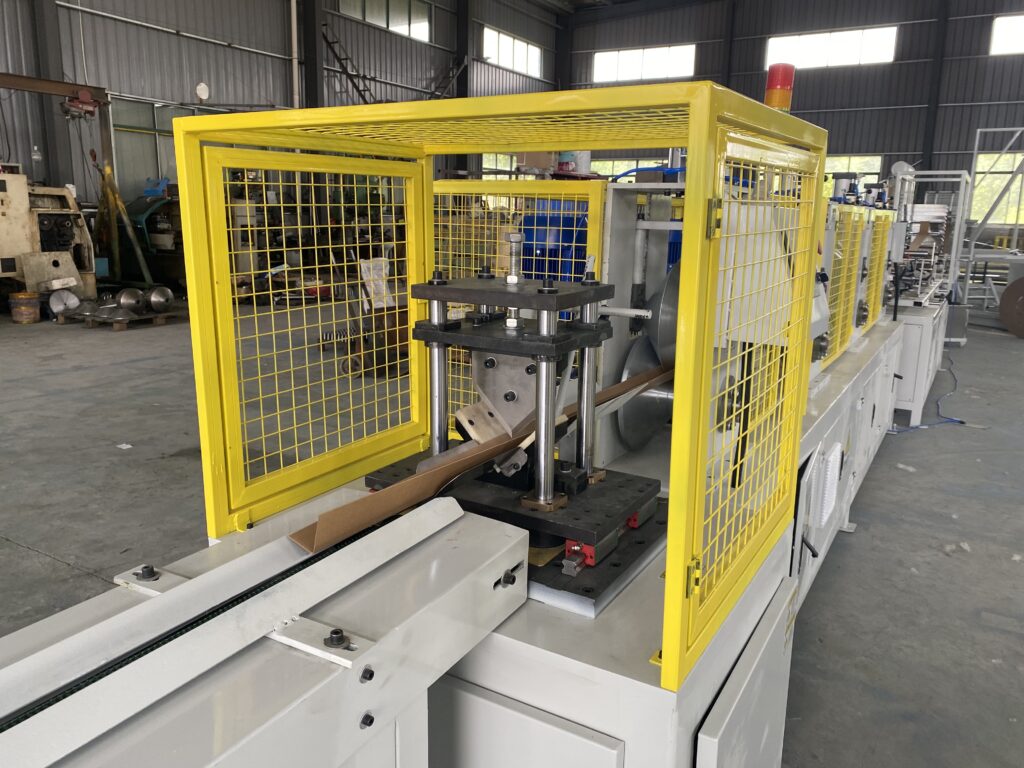
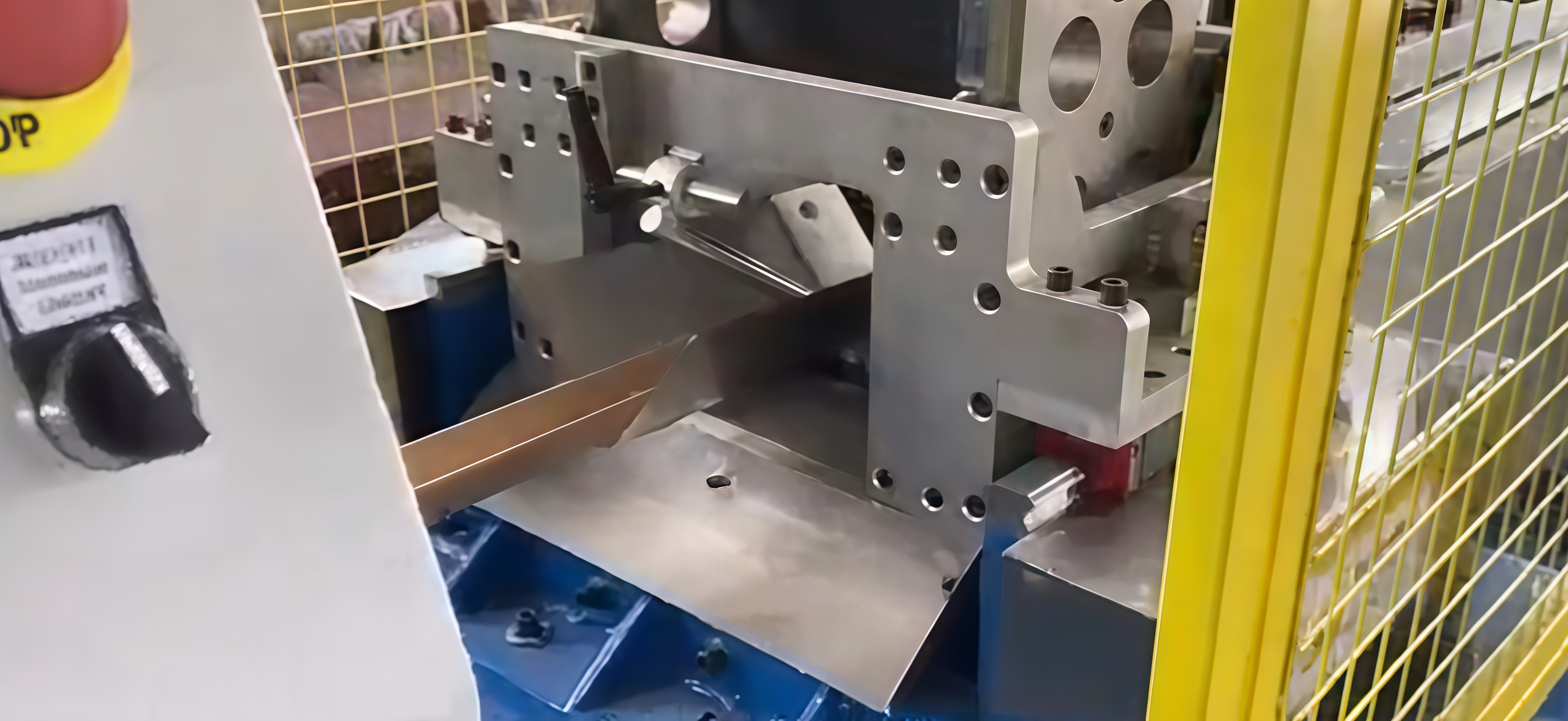
Even when using quality paper and suitable adhesives, poor forming accuracy can still affect compression performance. Uneven pressure, improper alignment, or unstable production conditions may create weak points within the edge board structure. The 120A Edge Board Making Machine is designed for continuous production speeds of up to 40–60 m/min while maintaining stable forming performance. Consistent production conditions help ensure uniform product dimensions, reliable bonding quality, and stable compression strength throughout each production batch.
More Than Just Thickness
Many manufacturers focus on thickness when evaluating edge board quality, but compression strength is actually the result of multiple factors working together. Raw material selection, adhesive quality, paper layer structure, and forming consistency all contribute to the final performance of the product. By combining suitable paper materials, proper adhesive systems, multi-layer forming capability, and stable production control, manufacturers can produce edge boards that provide reliable protection throughout storage, handling, and transportation. Understanding these hidden factors is essential for achieving stronger edge boards and maintaining consistent product quality in today’s demanding packaging industry.