Paper Cup Printing Is Changing
(And Small Orders Are Part of the Reason)
Paper cup printing is no longer limited to large-volume orders with one fixed design. In today’s market, cafés, beverage chains, dessert brands, and takeaway businesses often need seasonal graphics, promotional cup designs, trial orders, or customized cup branding in smaller quantities. This is where a digital paper cup printing solution becomes useful. The PS-210 Paper Cup Color Digital Printing Machine is developed for single PE-coated paper cup materials and related absorbent paper products, giving converters a more flexible way to handle paper cup color printing without relying entirely on traditional plate-based workflows.
1. It starts from digital image input instead of plate preparation
One of the biggest differences between the PS-210 and conventional printing workflows is that the machine can work directly from imported image files such as BMP, JPG, PDF, and TIFF. Instead of preparing printing plates before every job, operators can load the design file and move into production more quickly.
Why this matters in paper cup printing:
- suitable for short-run paper cup graphics
- easier to switch between different customer designs
- practical for urgent artwork changes or sample jobs
- reduces waiting time before printing starts
For cup converters handling more customized work, this changes the printing process from a fixed repeat-job model into a more flexible digital workflow.
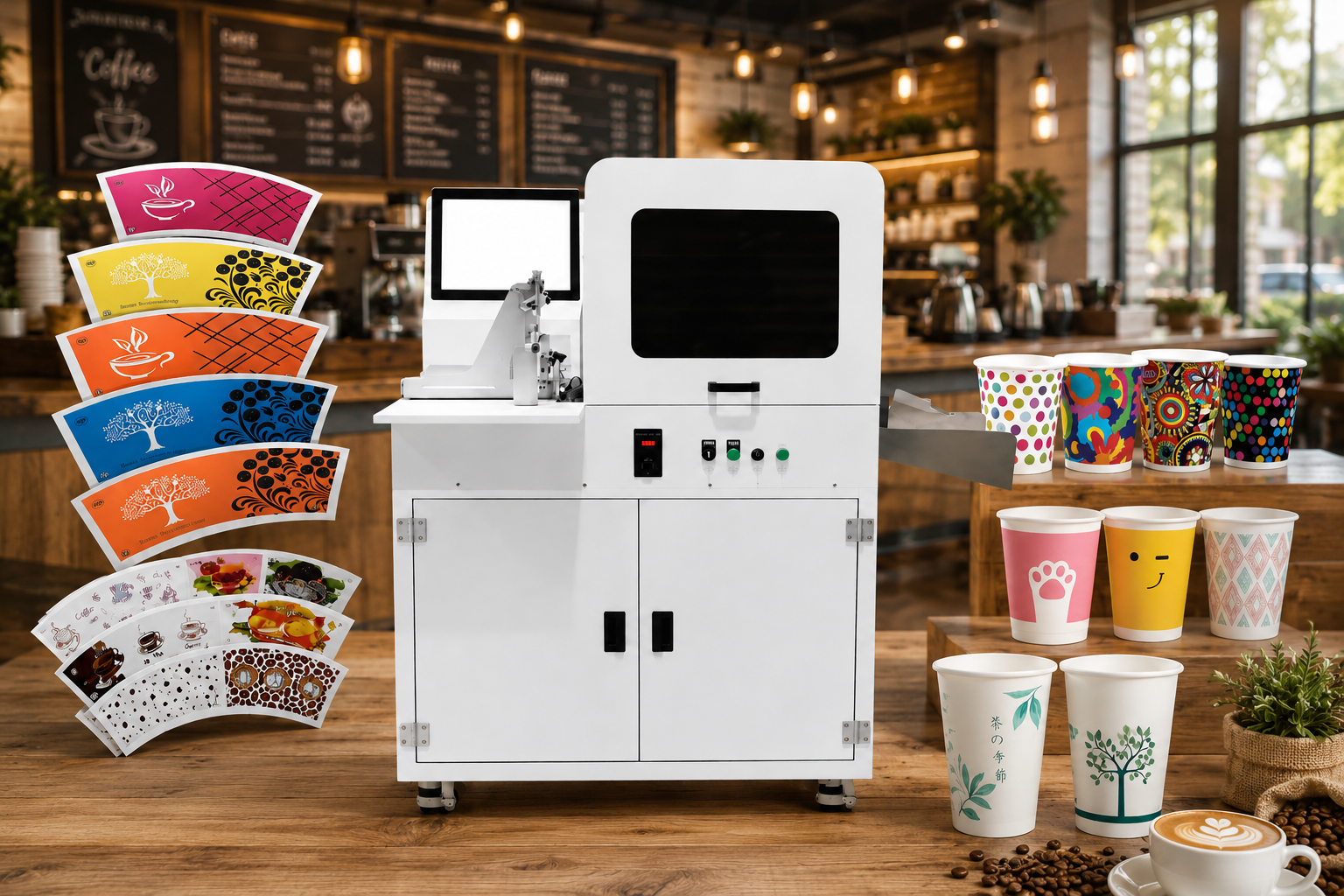
2. The machine is designed for color printing on paper cup materials
The PS-210 supports CMYK color printing, which allows paper cup designs to move beyond single-color logos or basic graphics. For beverage brands, milk tea shops, coffee chains, and promotional cup users, cup appearance is often part of the product image itself. A machine that can handle color-based branding gives packaging printers more room to support visual cup design requirements. The machine is designed exclusively for single PE-coated paper cups and is not suitable for 2PE coated paper cups. This is an important production point because the printing process must match the paper cup substrate used by the converter.
3. It is built for small-format absorbent paper printing, not only general paper printing
Although the PS-210 is positioned as a paper cup color digital printing machine, its working format is especially suitable for paper cup fan blanks and related absorbent paper products. According to the product configuration, the machine supports:
- spray printing width: 210 mm
- feed width: 50–350 mm
- feed length: 50–250 mm
- feed thickness: 125–600 g
These working ranges make the machine relevant for paper cup fan pieces and similar printed paper items that need controlled feeding within a small-format digital printing process.
4. Printing speed matters when short-run orders still need delivery speed
Short-run does not mean low urgency. In many real production environments, smaller orders still need to be completed quickly because they are tied to campaign launches, opening events, holiday promotions, or customer sampling schedules. The PS-210 offers jet printing speeds from 0–60 m/min, with output references of approximately 150–250 pieces per minute depending on the product format and job setup. This gives the machine a practical role in handling short-run paper cup work where customers want both customization and reasonable turnaround speed.
5. The ink system is also part of the machine’s application logic
The PS-210 uses environment-friendly water-based ink, and the product information also shows different consumable positioning for different applications. For example:
- 501 ink is used for paper bags and is not waterproof
- 502 ink is used for paper cups, bowls, and lunch boxes, and is waterproof
This is an important point because paper cup printing is not only about putting color onto paper. The print result also needs to match the end-use environment of the packaging. For cup-related applications, using the suitable waterproof ink system is part of making the printed product more practical for beverage and food packaging use.