Manual vs. Semi-Automatic Screen Printing Machines:
Which Upgrade Makes Business Sense?
Not every factory needs the newest fully automatic printing system. In many packaging and industrial printing applications, semi-automatic screen printing machines continue to play an important role because they offer a practical balance between productivity, investment cost, and printing quality. For manufacturers currently relying on manual screen printing, upgrading to a semi-automatic system is often a strategic step rather than simply purchasing newer equipment. Before making that decision, it is worth understanding the key differences between these two production methods.
Industry Trend
According to recent market research, the global screen printing market is expected to grow from USD 9.86 billion in 2025 to approximately USD 11.92 billion by 2030, representing a compound annual growth rate (CAGR) of 3.87%. The growth is supported by continued demand from packaging, textiles, industrial products, and functional electronics, where screen printing remains valued for its durability, ink thickness, and versatility. Rather than replacing conventional screen printing entirely, many manufacturers are investing in semi-automatic equipment to improve productivity and printing consistency while maintaining reasonable investment costs.
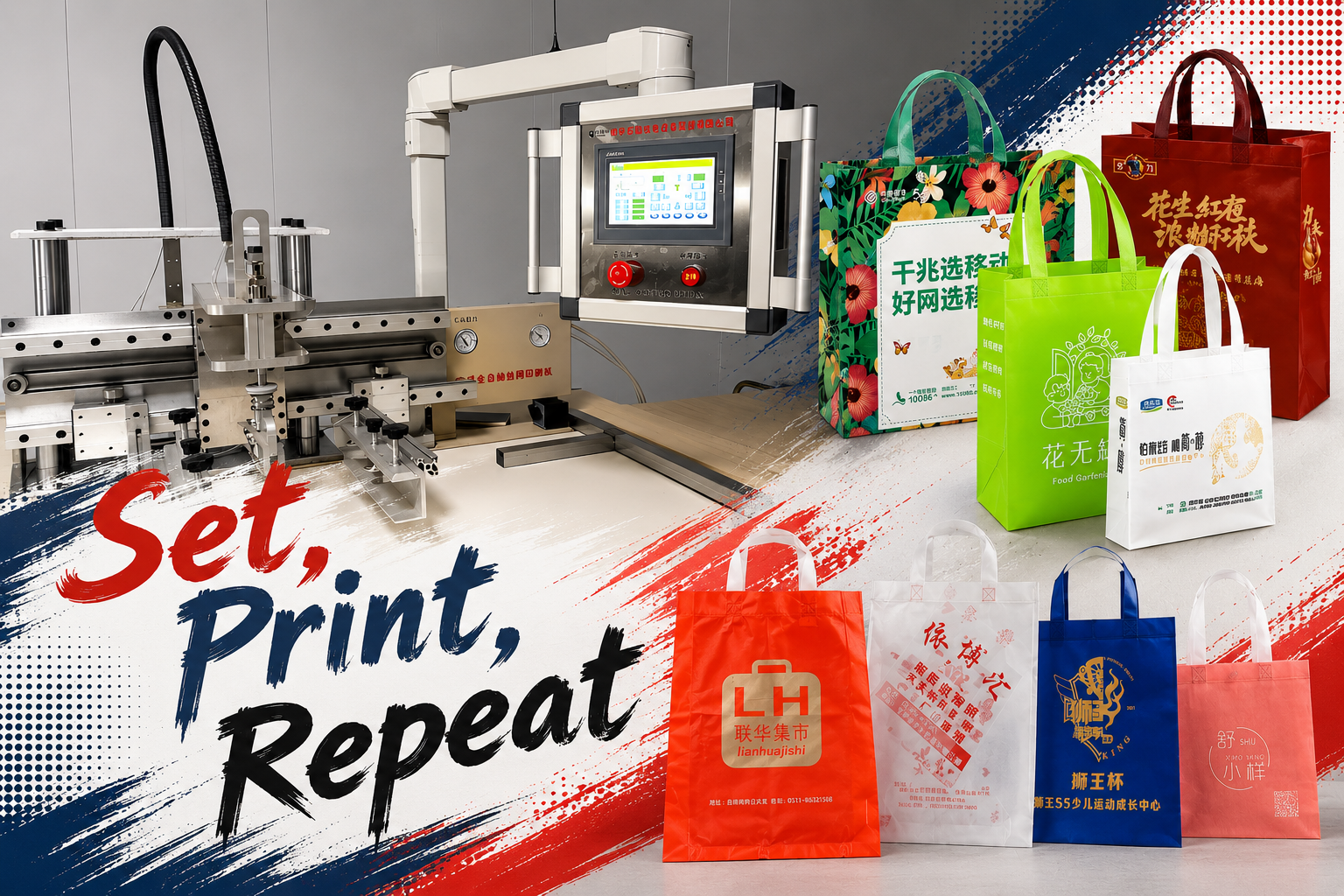
Choosing a new screen printing machine is not simply about purchasing the newest technology. It is about selecting equipment that matches your production requirements, labour availability, operating costs, factory space, and long-term business objectives.
For many manufacturers, manual screen printing remains suitable for sampling and small-volume jobs. However, as production volume increases, finding experienced operators and maintaining consistent printing quality become more challenging. A semi-automatic screen printing machine offers an effective middle ground—improving productivity and consistency without requiring the significantly higher investment of a fully automatic production line.
The best investment is not always the newest machine. It is the machine that delivers the greatest value for your production strategy.