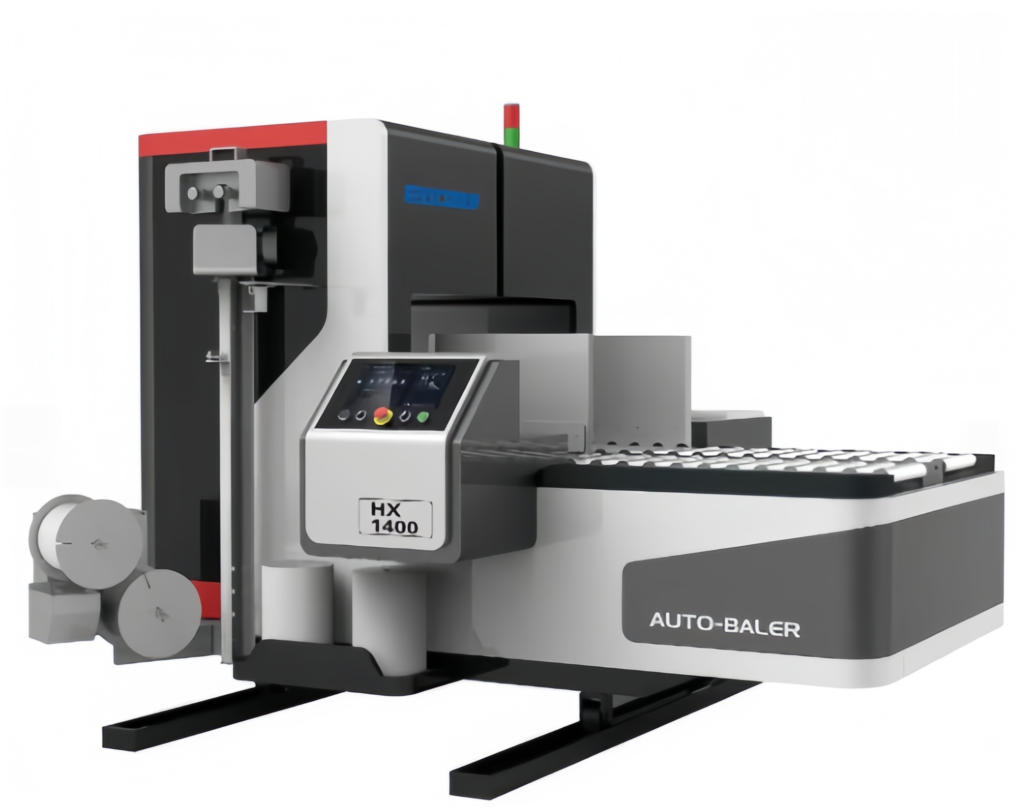
Automatic Strapping Machine:
The Missing Link in Carton Production Efficiency
Many carton manufacturers invest in faster printing, die cutting, folder gluing, and carton stitching equipment to increase production capacity. However, production efficiency depends on more than individual machine speed. One process that is often overlooked is the final strapping stage. When finished cartons cannot be bundled quickly enough, they begin to accumulate at the end of the production line, creating unnecessary handling and slowing the overall workflow. This is why the automatic strapping process has become an increasingly important part of modern carton manufacturing.
1. The Production Line Is Only as Efficient as Its Final Process
Many manufacturers successfully improve upstream production speed but still experience delays before cartons are ready for shipment. When the strapping process cannot match the output of the folder gluer or carton stitching machine, finished cartons accumulate at the end of the line. Operators spend additional time collecting, aligning, and bundling cartons manually, which can interrupt the continuous production flow.
2. The Missing Link Between Production and Shipment
An automatic strapping machine is more than a bundling device. It connects the production process with warehouse preparation and shipment. According to the PANSHI product design, the machine can be integrated with automatic folder gluers, carton stitching machines, and other end-of-line equipment, helping create a smoother packaging workflow rather than treating strapping as a separate manual operation.
3. Keeping Pace with Modern Carton Production
As production capacity increases, the final packaging stage must keep pace. The PANSHI Automatic Strapping Machine supports up to 25 packs per minute, helping reduce waiting time between production stages. For manufacturers operating continuous carton production lines, this allows finished bundles to move more efficiently toward palletizing, warehousing, or shipping.
4. Reducing Manual Operations Without Interrupting Production
Manual bundling requires operators to repeatedly collect cartons, align bundles, and perform the strapping process. The automatic strapping machine helps reduce this repetitive work and can reduce the need for 1–2 operators, according to the product specifications. Instead of constantly handling finished cartons, operators can focus on other production activities that require greater attention.
5. Automation Is About Workflow, Not Individual Machines
Many manufacturers evaluate production efficiency by looking at individual machine speeds. However, a production line performs best when every process works together—from printing and converting to the final strapping stage. An automatic strapping machine helps bridge the gap between carton production and shipment, ensuring the final packaging process supports the overall production flow rather than limiting it.
Conclusion
Improving carton production efficiency is not simply about purchasing faster equipment. It is about ensuring every stage of the production line operates as one continuous workflow. For manufacturers looking to optimize end-of-line packaging, the automatic strapping process may be the missing link that connects production with efficient warehouse handling and shipment preparation.